
Table of Contents
- Why You NEED to Care About Disability
- The Hard Truth: Disability Can Happen to ANYONE, ANYTIME
- The 10 Types of Common Disabilities
- Why AbleHearts Exists: Mary & Lydia's Story
- What an Accessible Bathroom Looks Like
- The Economic Opportunity: Disability Infrastructure Creates JOBS
- The Dark History: When "Leaders" Betrayed the Disabled
- Why Disability Isn't a "Family Lineage" Problem
- What We're Asking: Build a Society for EVERYONE
- The AbleHearts Mission: From Mary & Lydia to EVERYONE
- Direct Impact: How Your Donation Helps
- The Ultimate Question: Will YOU Be Ready?
- Take Action: Be Part of the Solution
- Final Thought: Disability Doesn't Discriminate
Why You NEED to Care About Disability (Even If You're "Perfectly Healthy")
"Why should I learn sign language? I can hear just fine."
"Why do we need wheelchair ramps? I can walk."
"Why invest in prosthetics manufacturing? I have all my limbs."
"Why have disability representation in leadership? I'm able-bodied."
Because disability doesn't knock before entering your life.
The Hard Truth: Disability Can Happen to ANYONE, ANYTIME
You're Fine Today. Tomorrow? Who Knows.
Let me paint you some real-life scenarios:
Scenario 1: The Morning Commute
- ☀️ 7:00 AM: You wake up healthy, strong, independent
- 🚗 7:30 AM: You drive to work, navigating chaotic Kenyan roads
- 💥 7:45 AM: A reckless matatu driver swerves into your lane
- 🏥 8:00 AM: You're in the hospital. The doctor says: "I'm sorry, we had to amputate your left leg."
Now what?
- ❌ Kenya has NO local prosthetics industry
- ❌ Importing a prosthetic leg costs $5,000-$15,000 (unaffordable for most)
- ❌ Roads have NO wheelchair accessibility
- ❌ Public buildings have NO ramps
- ❌ Employers discriminate against disabled workers
- ❌ Government provides ZERO support
Your life grinds to a halt. All because society didn't prepare for disability BEFORE it happened to YOU.
Scenario 2: The Silent Stroke
- 💼 Monday: You're a successful CEO, running your company
- 🧠 Tuesday morning: You wake up with a strange headache
- 🚑 Tuesday afternoon: STROKE—half your body is paralyzed
- ♿ Wednesday: You need a wheelchair for the rest of your life
Now what?
- ❌ Your office building has NO elevator
- ❌ Your home has NO wheelchair-accessible bathroom
- ❌ Your car can't accommodate a wheelchair
- ❌ Public transport is IMPOSSIBLE for wheelchair users in Kenya
- ❌ Society treats you like you're invisible
You went from CEO to struggling to use a toilet. All in 24 hours.
Scenario 3: Diabetes Complications
- 🍔 For years: You eat well, live the good life, maybe a bit too well
- 💉 Today: Your doctor says: "Your blood sugar is dangerously high. You have Type 2 diabetes."
- ⚠️ 6 months later: Diabetic neuropathy sets in—you lose sensation in your feet
- 🦶 1 year later: Gangrene. The doctor says: "We need to amputate your foot."
Now what?
- ❌ You can't walk
- ❌ You can't work (many jobs require mobility)
- ❌ You need specialized diabetic shoes (not available in Kenya)
- ❌ You need prosthetics or mobility aids (too expensive)
You're now classified as "disabled." Welcome to a world that wasn't built for you.
Scenario 4: Vision Loss from a Bug Bite
- 👀 Yesterday: Perfect 20/20 vision
- 🦟 Last night: A tiny insect pees in your eye while you sleep (yes, this happens—onchocerciasis, "river blindness")
- 🏥 Today: Severe eye infection, vision rapidly deteriorating
- 😎 Next week: You need vision aids, braille, assistive technology
Now what?
- ❌ Kenya has minimal braille resources
- ❌ Public infrastructure is NOT designed for the visually impaired
- ❌ Employers don't hire blind workers
- ❌ You can't navigate streets safely (no tactile paving, audible signals)
One insect. One night. Your entire world goes dark.
Scenario 5: Childhood Nutrition and Developmental Disabilities
- 🍟 For years: You feed your children junk food—cheap, convenient, tasty
- 🧠 Result: Poor nutrition during critical brain development years
- 📉 Outcome: Your child develops cognitive delays, learning disabilities
- 🏫 Challenge: Schools have NO special education resources
Now what?
- ❌ No inclusive schools
- ❌ No trained special education teachers
- ❌ No assistive learning tools
- ❌ Your child is labeled "retarded" and excluded from society
You belittled organic meals. Now your child pays the price for life.
The 10 Types of Common Disabilities (Yes, There Are MORE Than You Think)
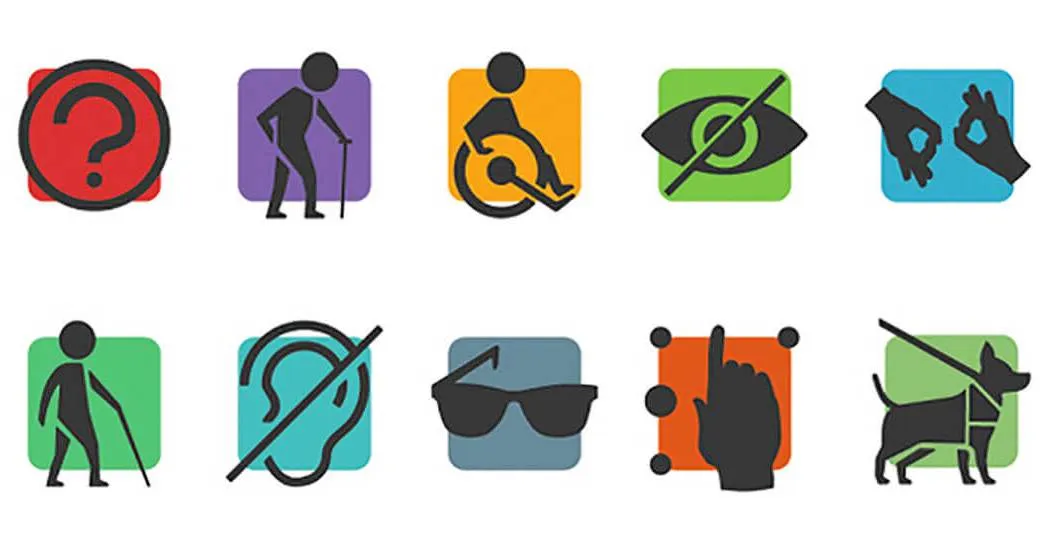
According to building accessibility standards, here are the 10 most common disabilities that require accommodations:
- Mobility Impairments (wheelchair users, crutches, walkers)
- Visual Impairments (blindness, low vision)
- Hearing Impairments (deafness, hard of hearing)
- Speech Impairments (mute, speech delays)
- Cognitive Disabilities (learning disabilities, autism, intellectual disabilities)
- Neurological Disabilities (epilepsy, Parkinson's, multiple sclerosis)
- Chronic Illnesses (diabetes, heart disease, chronic pain)
- Mental Health Conditions (depression, anxiety, PTSD)
- Developmental Disabilities (Down syndrome, cerebral palsy)
- Age-Related Disabilities (elderly with reduced mobility, vision, hearing)
ANY of these can happen to you. Or your parent. Or your child. Or your spouse.
Why AbleHearts Exists: Mary & Lydia's Story is EVERYONE'S Warning
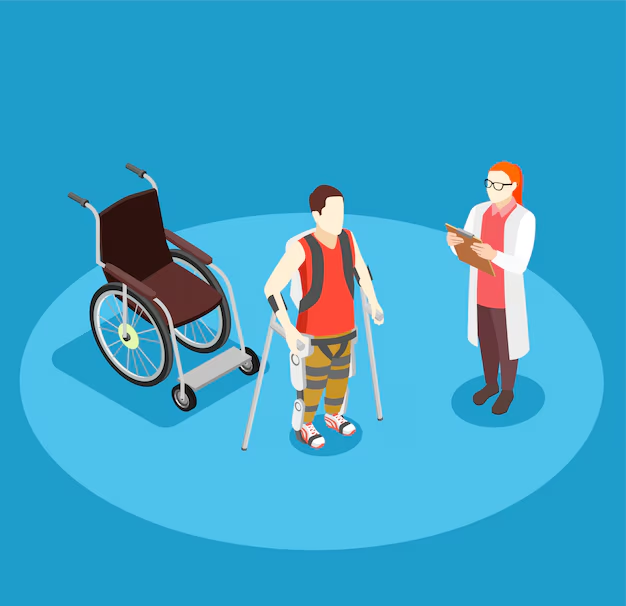
This Website Wasn't Built by Accident
AbleHearts was born from deep, personal understanding of what disability REALLY means in Kenya:
- 💔 Mary & Lydia were born with disabilities in a society that treats them as "lesser beings"
- 🚽 They can't access basic bathrooms (no grab bars, no accessible toilets)
- 🏚️ They live in homes that are falling apart because they can't do physical repairs
- 💼 They can't get jobs because employers won't hire disabled workers
- 🏥 They can't afford medical care, assistive devices, or mobility aids
- 🙏 They rely on charity just to survive
But here's the key: Mary & Lydia are YOU in a parallel universe where you had a different start.
Why This Website is Fully ARIA-Compliant
We didn't just talk about accessibility. We BUILT it into every line of code.
- ✅ Screen reader support (for the visually impaired)
- ✅ Keyboard navigation (for those who can't use a mouse)
- ✅ High contrast mode (for low vision users)
- ✅ Dyslexia-friendly fonts (for learning disabilities)
- ✅ Audio reader for blog posts (for the blind or illiterate)
- ✅ Skip-to-content links (for faster navigation)
- ✅ Proper ARIA labels on every interactive element
Because if WE don't practice what we preach, why should anyone else?
What an Accessible Bathroom Looks Like (And Why Kenya NEEDS Them)
Example 1: Public Toilet with Handicap Supports
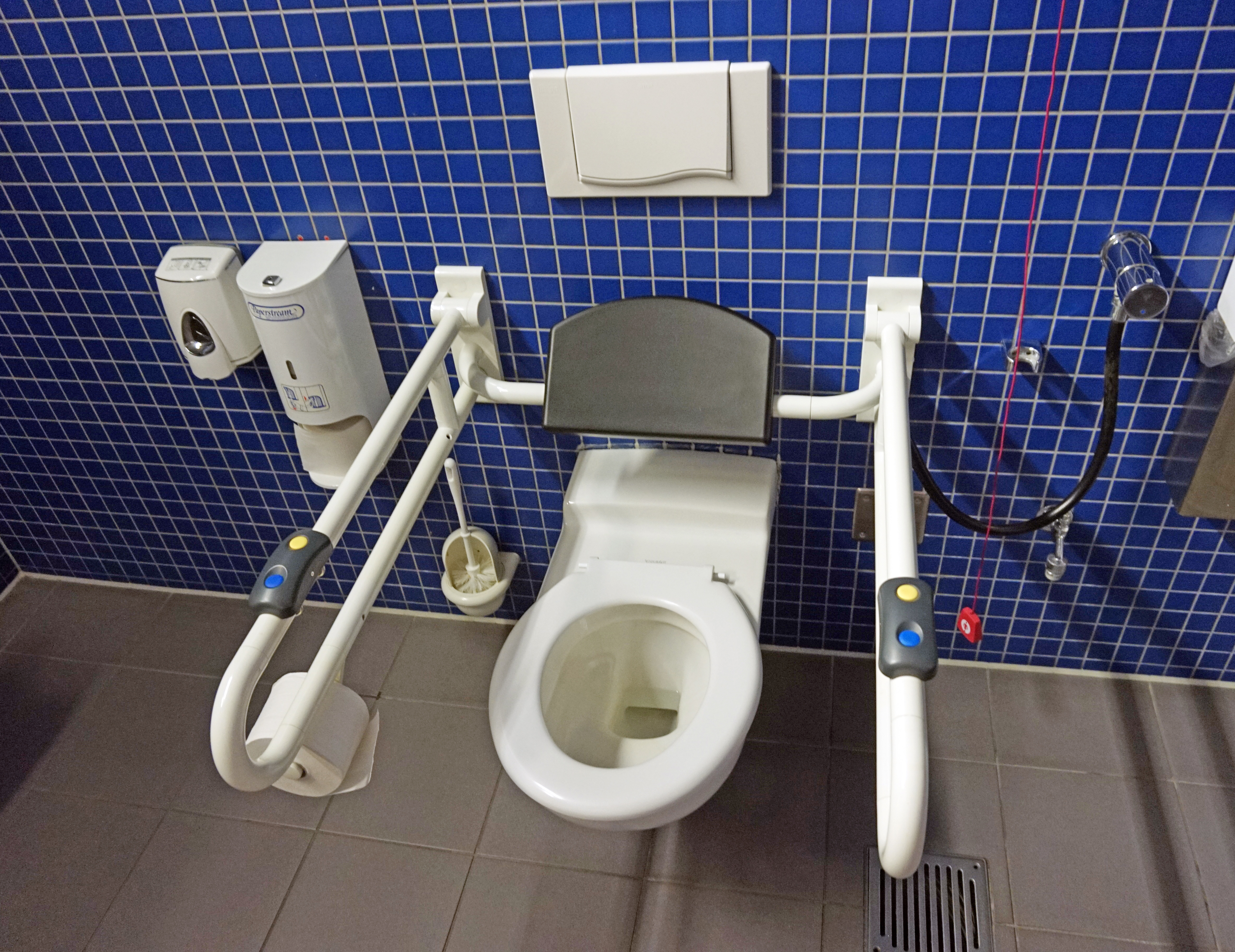
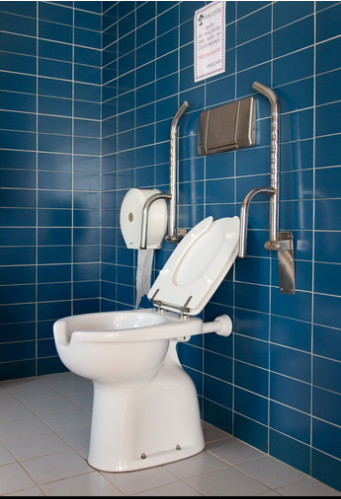
Key Features:
- ✅ Grab bars on both sides of the toilet
- ✅ Wide doorways (minimum 36 inches for wheelchairs)
- ✅ Raised toilet seat (easier transfers)
- ✅ Non-slip flooring
- ✅ Emergency call button
- ✅ Lever-style door handles (not knobs)
Cost to build in Kenya: ~$1,500-$3,000 per bathroom
Current availability in Kenya: Less than 1% of public buildings have this.
Example 2: Home Bathroom for Disabled Persons
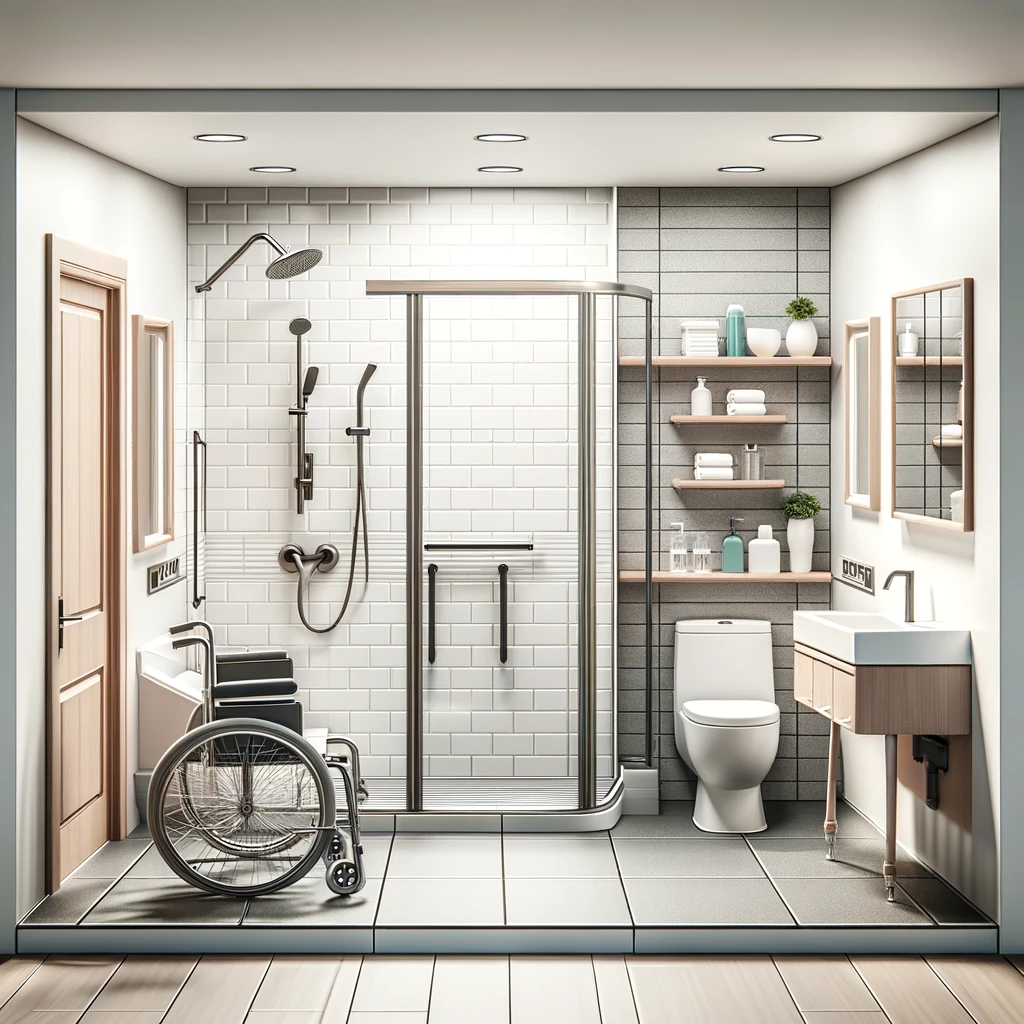
Key Features:
- ✅ Roll-in shower (no step/threshold)
- ✅ Shower chair/bench
- ✅ Handheld showerhead
- ✅ Grab bars in shower and near toilet
- ✅ Accessible sink (wheelchair clearance underneath)
- ✅ Lever faucets (easier to operate)
Cost to retrofit an existing bathroom: ~$2,000-$5,000
Cost to build from scratch: ~$3,000-$8,000
Example 3: How to Make a Bathroom Handicap-Accessible
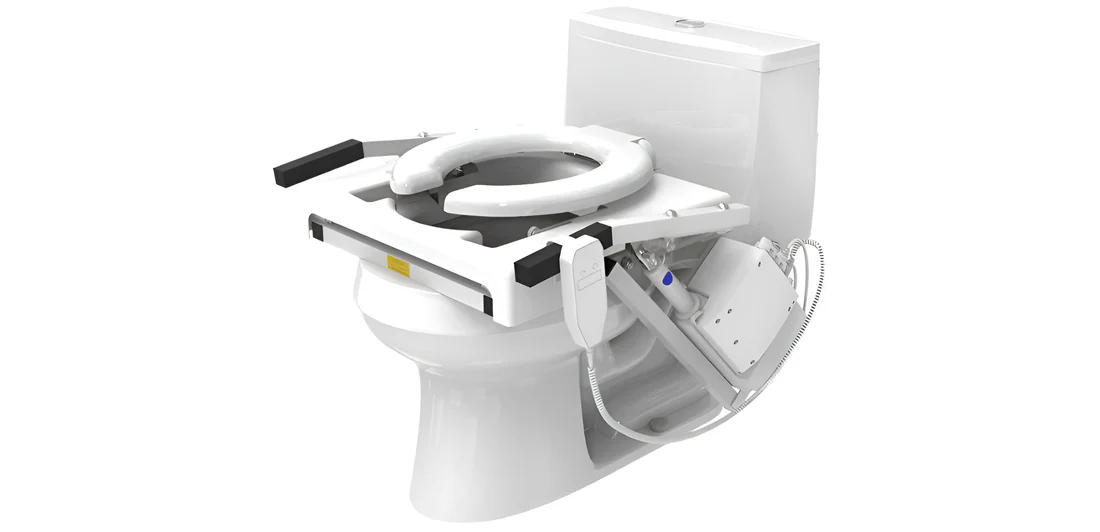
Step-by-step accessibility modifications:
- Widen the doorway (minimum 32-36 inches)
- Install grab bars (near toilet, in shower)
- Lower the sink (29 inches max height, knee clearance)
- Add a roll-in shower (zero-threshold entry)
- Install lever faucets (replace twist knobs)
- Use non-slip flooring (prevent falls)
- Add proper lighting (bright, even illumination)
- Install emergency call button (within reach from toilet/shower)
Why Kenya needs this: EVERY new building should have at least ONE accessible bathroom by law. But we don't enforce it.
The Economic Opportunity: Disability Infrastructure Creates JOBS
Here's the Business Case for Government Investment
Scenario: Government subsidizes materials for disability-accessible construction
Benefits:
Job Creation for Unemployed Youth
- Train young people in accessible design and construction
- Create specialized trades: grab bar installation, ramp construction, prosthetic manufacturing
- Estimated jobs created: 10,000-50,000 in Kenya alone
Local Manufacturing of Assistive Devices
- Prosthetics (currently imported at $5,000-$15,000 each)
- Wheelchairs (currently imported at $200-$2,000 each)
- Grab bars, shower chairs, raised toilet seats
- Potential industry value: $50-100 million annually in Kenya
Increased Economic Participation of Disabled Persons
- When buildings are accessible, disabled people can WORK
- When transport is accessible, disabled people can TRAVEL
- When society is inclusive, disabled people can CONTRIBUTE
- Estimated GDP boost: 1-2% (based on WHO studies)
Medical Cost Savings
- Accessible bathrooms = fewer falls = fewer hospital visits
- Early intervention = fewer complications
- Preventive care = lower long-term costs
Bottom line: Investing in disability infrastructure is NOT charity. It's smart economics.
The Dark History: When "Leaders" Betrayed the Disabled
The Lake Drowning Tragedy (Kenya's Shame)
We've heard this story too many times:
- 🤝 A "leader" gathers disabled people from villages
- 🎁 Promises them government support, better lives, hope
- 🚌 Loads them onto buses for a "special program"
- 🌊 Takes them to a lake
- 💀 Drowns them
- 🤐 Justification: "We're ending their suffering."
This is GENOCIDE.
This happened. Multiple times. In Kenya and neighboring countries.
Why? Because society views disabled people as:
- ❌ Burdens
- ❌ Cursed
- ❌ Unproductive
- ❌ Better off dead
This is why AbleHearts fights. This is why disability awareness MATTERS.
Why Disability Isn't a "Family Lineage" Problem
The Myth: "Disability only happens to certain families."
The Reality: If this were true, disabled families would have ended generations ago through natural selection. But they haven't.
Why?
Because disability is NOT genetic in most cases. It's environmental, accidental, or acquired.
Examples:
- 🚗 Car accidents (anyone can get hit)
- 🦟 Infections (river blindness, polio, meningitis)
- 🧠 Strokes (can happen to anyone over 40)
- 💉 Diabetes (lifestyle-related, affects millions)
- 🏗️ Workplace injuries (construction, mining, farming)
- 🔫 Violence (gunshot wounds, assault)
- 🏥 Medical errors (botched surgeries, birth complications)
Disability is a HUMAN condition, not a family curse.
What We're Asking: Build a Society for EVERYONE (Including Future You)
1. Accessible Infrastructure (Government Priority)
Mandate:
- ✅ ALL new buildings must have accessible bathrooms
- ✅ ALL public transport must accommodate wheelchairs
- ✅ ALL roads must have tactile paving for the blind
- ✅ ALL pedestrian crossings must have audible signals
Cost: High upfront, but pays for itself in economic productivity and medical cost savings.
2. Local Manufacturing of Assistive Devices (Create Jobs)
Government should subsidize:
- ✅ Prosthetics manufacturing plants
- ✅ Wheelchair production facilities
- ✅ Grab bar and accessibility equipment factories
- ✅ Training programs for specialized trades
Result: Disabled people get affordable devices. Youth get jobs. Economy grows.
3. Inclusive Education and Employment (End Discrimination)
Mandate:
- ✅ Schools must provide special education resources
- ✅ Employers must hire disabled workers (quota system)
- ✅ Government jobs must reserve positions for disabled people
- ✅ Sign language interpretation in public services
Result: Disabled people become CONTRIBUTORS, not dependents.
4. Healthcare and Prevention (Stop Disabilities Before They Start)
Invest in:
- ✅ Diabetes screening and management (prevent amputations)
- ✅ Stroke prevention programs (hypertension control)
- ✅ Road safety (reduce accidents)
- ✅ Nutrition education (prevent developmental disabilities)
- ✅ Vision and hearing screening (early intervention)
Result: Fewer people become disabled in the first place.
The AbleHearts Mission: From Mary & Lydia to EVERYONE
Why We Built This Website
AbleHearts started with TWO disabled women in rural Kenya.
But it's grown into something bigger:
- 🌍 A movement for disability rights across Africa
- 🏗️ A blueprint for accessible infrastructure
- 💼 An advocacy platform for inclusive employment
- 📚 An education hub for disability awareness
- ❤️ A call to action for compassionate hearts worldwide
Everything on this website is built with accessibility in mind because we LIVE the reality of disability.
- 💻 Full ARIA compliance (screen readers work perfectly)
- 🎧 Audio reader (for the blind or illiterate)
- ⌨️ Keyboard navigation (for those who can't use a mouse)
- 🎨 High contrast mode (for low vision)
- 📖 Dyslexia-friendly fonts (for learning disabilities)
We don't just TALK about accessibility. We BUILD it.
Direct Impact: How Your Donation Helps Mary & Lydia (And Others Like Them)
Immediate Needs ($5,000-$8,000)
Phase 1: Accessible Housing
- 🚽 Disability-adapted bathroom (grab bars, raised toilet, roll-in shower)
- 🚪 Wheelchair-accessible doorways and ramps
- 🏗️ Level flooring (Lydia can't walk on uneven surfaces)
- 🏡 Solid, waterproof roof
Phase 2: Economic Empowerment
- 🛒 Accessible kiosk rebuild (Mary's business)
- 📱 Communication tools (for advocacy and connection)
- 🎓 Skills training (digital literacy, business management)
Phase 3: Medical and Mobility
- ♿ Wheelchairs (manual and electric)
- 👟 Specialized orthopedic shoes
- 🦴 Medical care and physiotherapy
100% of donations go directly to Mary & Lydia. Zero overhead. Full transparency.
The Ultimate Question: Will YOU Be Ready When Disability Knocks?
Put Yourself in These Shoes
Imagine:
- 🚗 You're in a car accident tomorrow. You lose a leg.
- 🧠 You have a stroke next month. You're paralyzed.
- 💉 Your diabetes progresses. You need amputation.
- 👀 An infection blinds you. You need braille and screen readers.
Now ask yourself:
- ❓ Does your home have accessible bathrooms?
- ❓ Does your workplace have ramps and elevators?
- ❓ Can you afford a prosthetic limb?
- ❓ Will your employer keep you if you're disabled?
- ❓ Can you navigate public transport in a wheelchair?
If the answer is NO to any of these, then you're NOT ready.
And neither is Kenya.
Take Action: Be Part of the Solution
1. Donate to AbleHearts
2. Advocate for Accessibility
- ✅ Demand accessible bathrooms in public buildings
- ✅ Push for disability employment quotas
- ✅ Support local prosthetics manufacturing
3. Educate Yourself
- ✅ Learn basic sign language
- ✅ Understand braille
- ✅ Practice empathy (use a wheelchair for a day, try navigating blindfolded)
4. Share This Post
- ✅ X (Twitter): Tag @DisabilityRightsKE
- ✅ Facebook: Post in community groups
- ✅ WhatsApp: Share with family and friends
Use hashtag: #DisabilityAwareness #AbleHearts #AccessibleKenya
Final Thought: Disability Doesn't Discriminate. Neither Should We.
You are ONE accident, ONE illness, ONE genetic mutation away from needing everything Mary & Lydia need.
The only difference between you and them? Luck. Timing. Circumstance.
So when you see a wheelchair ramp, don't think "I don't need that."
Think: "I don't need that YET."
When you see a disabled person struggling, don't think "That's their problem."
Think: "That could be me tomorrow."
Build the world you'd want to live in if YOU were disabled.
Because one day, you might be.
This post is part of the AbleHearts Disability Awareness series, documenting the lives of Mary & Lydia and advocating for an inclusive society that works for EVERYONE.
100% of donations go directly to Mary & Lydia. Zero overhead. Full transparency.